
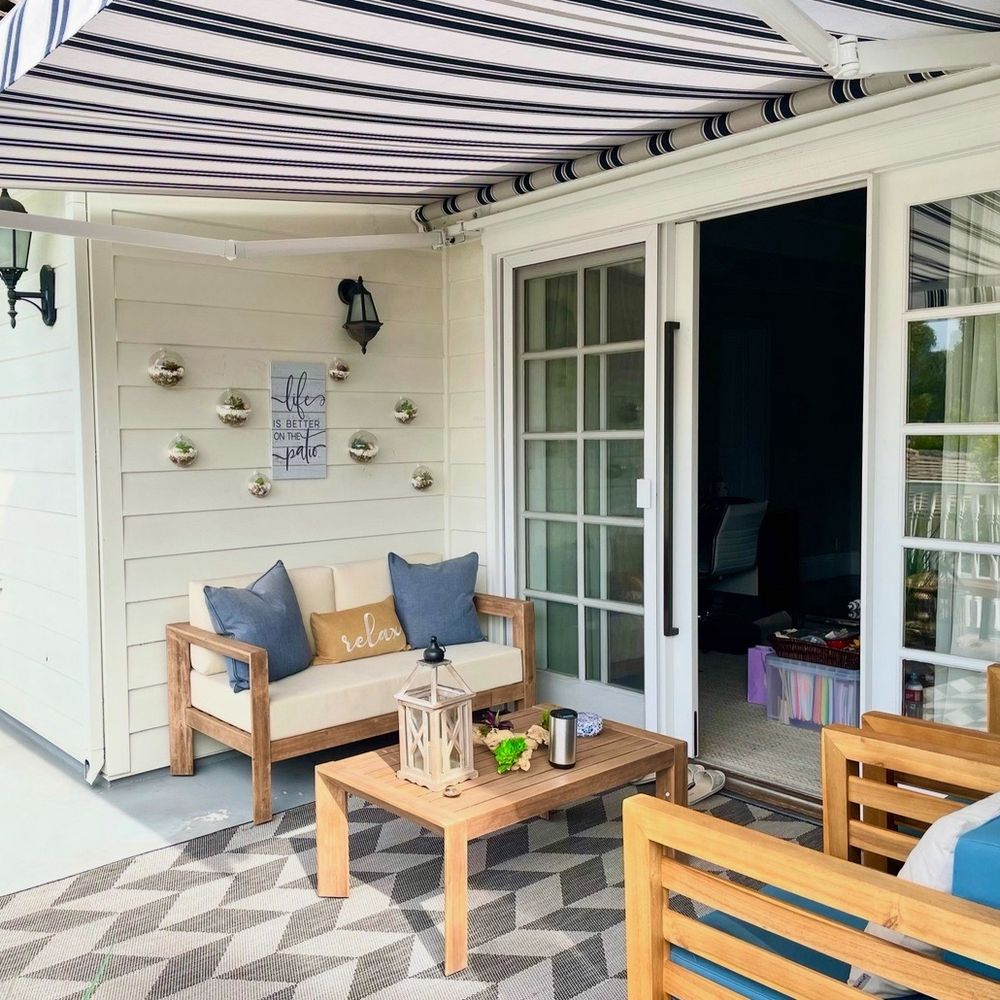
When July hits Rouge Valley and your backyard thermometer climbs past 100°F, that beautiful patio behind your ranch home becomes a no-go zone. You watch the afternoon sun bake your outdoor furniture while your Pacific Power bill spikes from running the AC overtime. Your patio should be an extension of your living space, not a seasonal sacrifice to Southern Oregon’s intense summer heat.
Homeowners in Ashland Hills and Medford Estates face a unique challenge: you invested in generous outdoor entertainment areas precisely because Rouge Valley’s climate offers 200+ days of sunshine annually (Source: Western Regional Climate Center, 2023). But without proper shade solutions, those peak afternoon hours from 2-6 PM render patios unusable for nearly four months each year.
Why Rouge Valley Patios Need Specialized Shade Solutions
The Rogue Valley sits in a rain shadow that creates desert-like summer conditions uncommon elsewhere in Oregon. Your patio isn’t dealing with Seattle drizzle or Portland overcast—you’re managing direct UV exposure that rivals Arizona. This climate reality demands shade systems engineered for your specific situation.
The Temperature Differential That Matters
Unshaded concrete patios in direct Southern Oregon sun can reach surface temperatures of 140°F even when air temperature sits at 95°F (Source: Environmental Protection Agency Urban Heat Island Report, 2022). A properly positioned retractable awning reduces surface temperatures by 20-30 degrees, making barefoot access possible and furniture safe to touch.
For you as a homeowner near Bear Creek Greenway or anywhere in the valley, this temperature drop translates directly to usability. Your morning coffee extends into brunch. Evening barbecues can start before 7 PM. The kids can actually play outside during summer vacation.
Architectural Compatibility With Local Home Styles
Rouge Valley’s housing stock presents two dominant patterns that retractable awnings complement perfectly:
- Classic ranch homes built from the 1960s-1980s typically feature 12-20 foot covered patio spans with direct western exposure—ideal candidates for motorized retractable systems that mount to existing fascia
- Modern builds in newer Medford Estates developments often include outdoor entertainment areas with sliding glass walls that benefit from extended-projection awnings reaching 14 feet or more
Unlike permanent patio covers that block your winter sun access (which you absolutely want during Rouge Valley’s 45°F December afternoons), retractable systems let you control your exposure seasonally.
How Retractable Awning Systems Reduce Your Cooling Costs
Every square foot of glass on your home’s south and west faces acts as a solar collector during summer. The U.S. Department of Energy reports that exterior shading devices like awnings can reduce solar heat gain through windows by up to 77% on south-facing exposures (Source: U.S. Department of Energy, Energy Saver Guide, 2023). For Rouge Valley homes with large sliding patio doors, this translates to measurable Pacific Power bill reductions.
The Math Behind Your Energy Savings
Consider a typical Ashland Hills ranch home with an 8-foot sliding glass door facing west. During July, that unshaded glass admits approximately 2,000 BTUs per hour during peak afternoon sun. Your AC system must remove every one of those BTUs, consuming roughly 0.6 kWh per hour just to counteract that single door.
| Scenario | Daily Heat Gain (BTUs) | Monthly AC Cost Impact |
|---|---|---|
| Unshaded west-facing slider | 10,000+ | $45-65 |
| With retractable awning deployed | 2,300 | $12-18 |
| Estimated monthly savings | — | $33-47 |
At Pacific Power’s current residential rate of approximately $0.12 per kWh (Source: Pacific Power Oregon Rate Schedule 4, 2024), a quality retractable awning protecting your primary patio entrance can offset $150-200 of your summer cooling costs over a four-month season.
Beyond Windows: Full Patio Coverage Benefits
Your sliding door represents just one heat entry point. Full-width retractable patio awnings extending 10-14 feet from your home’s exterior create a genuine outdoor room that:
- Shields your entire seating and dining area from direct UV exposure
- Protects outdoor furniture from fabric fading (UV exposure causes 40% of outdoor fabric degradation according to the American Home Furnishings Alliance, 2022)
- Creates usable shade for container gardens that would otherwise scorch in Rouge Valley’s intense afternoon light
- Reduces ambient temperature in the shaded zone by 15-20°F compared to surrounding exposed areas
Selecting the Right Retractable System for Your Rouge Valley Home
Not all outdoor awnings perform equally in Southern Oregon’s conditions. You need fabric engineered for intense UV exposure, frames rated for occasional valley wind events, and projection depths that actually cover your entertainment space.
Fabric Performance Specifications
Solution-dyed acrylic fabrics with UV stabilizers represent the industry standard for Rouge Valley installations. Look for materials meeting these benchmarks:
- UV blockage rating of 95% or higher—anything less allows damaging rays through even under shade
- Colorfastness warranty of 10+ years—inferior fabrics fade noticeably within 2-3 Rouge Valley summers
- Water resistance without full waterproofing—you want breathability to prevent mildew during shoulder season moisture
- Mold and mildew resistance treatment—essential for any fabric that will retract while slightly damp
Frame and Mechanism Considerations
The National Association of Home Builders rates powder-coated aluminum frames as the preferred material for retractable awning systems in western climates, offering 25+ year structural longevity when properly maintained (Source: NAHB Remodeling Market Index Technical Report, 2023). For Rouge Valley specifically, you want:
Motorized systems with wind sensors protect your investment automatically. When unexpected afternoon gusts sweep through the valley—common during summer thermal pattern shifts—sensors retract the awning before fabric stress occurs. Manual systems require you to monitor conditions constantly.
Projection depth matters enormously for actual usability. A 10-foot projection covers a standard patio dining set. A 14-foot projection creates genuine outdoor room space including conversation seating. Measure your actual entertainment zone before assuming standard depths will serve your needs.
Professional Installation vs. DIY: What Rouge Valley Conditions Demand
Big-box store awning kits appeal to budget-conscious homeowners, but Rouge Valley’s specific conditions create installation challenges that frequently exceed DIY skill levels.
Mounting Surface Challenges
Ashland Hills ranch homes often feature stucco or T1-11 siding over standard framing—neither material accepts awning bracket loads without proper backing reinforcement. Newer Medford Estates construction may use engineered lumber or steel framing that requires specialized fasteners. A failed mounting bracket during a wind event can cause thousands in siding and structural damage.
Professional installers assess your specific fascia and wall construction, identify stud or beam locations, and select appropriate anchoring systems. They also verify that your home’s electrical system can support motorized operation if you choose that upgrade—critical for older Rouge Valley homes with original electrical panels.
Warranty and Performance Guarantees
Quality retractable awning systems carry manufacturer warranties covering fabric, frame, and motor components separately. However, nearly all manufacturers void warranties for improper installation. Your professional installation includes:
- Documentation satisfying warranty requirements
- Proper pitch calibration ensuring water drainage
- Tension adjustment preventing fabric sagging or flutter
- Motor limit programming for exact extension and retraction points
- Integration with existing home automation systems where applicable
Ready to transform your Rouge Valley patio into a true outdoor living space? Schedule your free outdoor shade consultation and we’ll assess your specific home, orientation, and coverage needs.
Why Rouge Valley Homeowners Trust Local Shade Specialists
National retailers selling cookie-cutter awning packages don’t understand that your Medford Estates home faces different conditions than a Phoenix subdivision or a Seattle suburb. They can’t advise you on optimal mounting heights for Rouge Valley’s sun angles or recommend fabrics proven in our specific UV intensity.
Local expertise means understanding that afternoon shade requirements differ dramatically from morning needs in our valley orientation. It means knowing that homes within walking distance of Rogue Valley Mall face slightly different wind patterns than properties backing Bear Creek Greenway. These micro-details determine whether your retractable patio awning becomes a daily-use feature or an expensive disappointment.
We’ve installed hundreds of retractable shade systems across Rouge Valley since 2008. Our team lives here, faces the same summer heat you do, and stakes our reputation on every installation performing for years to come.
What Your Neighbors Are Experiencing
Mark T., Ashland Hills: “We installed a 12-foot motorized awning over our west-facing patio last May. First summer, our Pacific Power bill dropped $42/month compared to the previous year. We actually use our patio for dinner now instead of waiting until after sunset.”
Sandra K., Medford Estates: “The installer spent 20 minutes just analyzing our sun angles before recommending projection depth. Our previous contractor wanted to sell us a 10-foot system—we went with 14 feet based on actual measurements and it covers our entire entertainment area perfectly.”
James and Connie R., near Bear Creek Greenway: “We compared three quotes. Only one company mentioned the wind sensor option and explained why it mattered for our specific location. Two years in, that sensor has auto-retracted the awning at least a dozen times during sudden gusts. Zero fabric damage.”
Take Back Your Outdoor Space This Summer
Rouge Valley summers aren’t getting cooler. Your patio represents valuable square footage that shouldn’t sit unused four months annually. Retractable awning systems offer the flexibility permanent structures can’t match—full shade when you need it, full sun access when you don’t.
Your next step is simple: Schedule your free outdoor shade consultation in Rouge Valley today. We’ll measure your space, analyze your sun exposure patterns, and provide options matching your home’s architecture and your budget expectations. No pressure, no obligation—just honest expertise from people who understand what Rouge Valley patios actually need.
Contact us now or call to book your consultation before peak summer installation season fills our schedule.
Frequently Asked Questions
How long does a retractable patio awning typically last in Rouge Valley’s climate?
Quality retractable awnings with solution-dyed acrylic fabrics and powder-coated aluminum frames typically deliver 15-20 years of service in Southern Oregon conditions when properly maintained. The key longevity factors are UV-stabilized fabric that resists degradation from our intense summer sun, and motorized systems with wind sensors that automatically protect the awning during unexpected gusts. Annual cleaning and mechanical inspection extend service life significantly.
Can I install a retractable awning on a two-story home to shade a ground-level patio?
Yes, though second-story mounting requires specialized hardware and longer support arms to achieve proper projection angles. These installations cost 20-40% more than standard single-story mounts due to equipment access requirements and additional structural reinforcement. The benefit is dramatically increased shade coverage—a second-story mount can shade areas that ground-level installations simply cannot reach due to sun angle geometry.
What happens to my retractable awning during Rouge Valley’s occasional winter ice storms?
Retractable awnings should always be fully retracted during winter months and any precipitation events. The cassette housing that protects the fabric when retracted shields it from ice, snow, and debris accumulation. Motorized systems with weather sensors can be programmed to auto-retract when temperatures drop below freezing. Never attempt to operate a retractable awning with ice or snow accumulation on the fabric—the additional weight can damage both fabric and motor mechanisms.
Do retractable awnings require permits in Medford or Ashland?
Most residential retractable awning installations in Jackson County do not require building permits because they are considered temporary or movable shade structures rather than permanent construction. However, homes in historic districts or those governed by HOA architectural guidelines may need design approval before installation. We verify permit requirements for your specific property during the consultation process at no charge.

